THE ART & SCIENCE OF SEAMLESS EXPERIENCES

THE ART & SCIENCE OF SEAMLESS EXPERIENCESTHE ART & SCIENCE OF SEAMLESS EXPERIENCESTHE ART & SCIENCE OF SEAMLESS EXPERIENCES
  • Home
  • Portfolio
  • Tools
  • About
  • More
    • Home
    • Portfolio
    • Tools
    • About

THE ART & SCIENCE OF SEAMLESS EXPERIENCES

THE ART & SCIENCE OF SEAMLESS EXPERIENCESTHE ART & SCIENCE OF SEAMLESS EXPERIENCESTHE ART & SCIENCE OF SEAMLESS EXPERIENCES
  • Home
  • Portfolio
  • Tools
  • About

Keeping Research Insight Alive All the Way to the Wireframe

Building a free toolkit that gives designers and researchers

Somewhere between the research readout and the polished wireframe, insight tends to vanish. Teams gather rich understanding of their users, then jump straight to the concrete layer — the wires, the surface, the pixels — and the deeper thinking quietly falls out of the work. I've watched it happen across teams and organizations, and I've come to see it as one of the most expensive habits in modern product design.

I built the Insight Infused Wireframe Kit as a direct response. It's a free, downloadable toolkit that ties research insight to the wireframes themselves, so the reasoning behind a design stays visible to everyone who touches it. The idea is simple but stubbornly important: don't just show what the design is — show why it is that way, right there in the artifact the team argues over every day.

Explore it: Interactive preview · Download the Adobe XD kit

Toolkit inspiration from Jesse Jame's Garrett's article: "I helped pioneer UX design..."

At a Glance
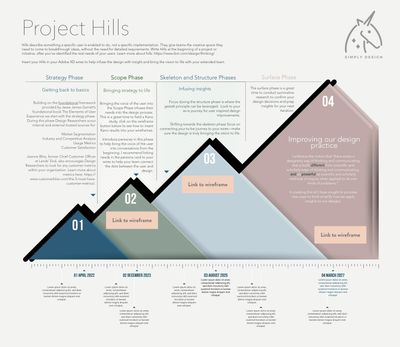
  • The problem: UX practice has drifted toward polished surface-level output and away from the strategic, insight-driven thinking that makes design valuable — and designers and researchers are rarely taught to work together
  • My role: Named the systemic gap from a leadership vantage point, then built and freely published a practical tool to close it — pushing the conversation beyond my own team and into the field
  • The influences: Jesse James Garrett's Elements of User Experience framework and L. Bruce Archer's design science thinking, which argues for a "designerly" way of knowing as rigorous as scientific inquiry
  • What I built: The Insight Infused Wireframe Kit — overlays and components that bind research insight, journey maps, and prioritization directly to wireframes
  • How it's used: Tie a Design Thinking journey map straight to the wires; flag user-validated must-have features with an insight overlay so they don't get quietly cut
  • Strategic value: A shared language between design and research that keeps strategy visible through execution — freely distributed so any team can adopt it

The Challenge

Garrett's Elements framework has shaped my practice for years, and it's long been required reading for the people I lead. It maps how a product moves from the abstract — strategy and user needs — to the concrete surface people actually see. The whole point is that each layer should inform the next.

What I keep seeing instead is teams sprinting straight to the surface. Agile pressure rewards visible progress, so wires appear fast and iteration keeps moving — but the insight from research never makes it into those wires. Jesse James Garrett named this drift himself, warning that product design has become "increasingly less insight-driven," challenging teams less and less to reach for deeper, subtler user needs. His words echoed a restlessness I'd felt for a long time.

There's a deeper root, too. Most training venues never teach designers and design researchers how to actually work together. They graduate into the same rooms speaking different languages, and the handoff between them leaks value every time. Archer's argument stayed with me here: there is "a designerly way of thinking and communicating" that is different from scientific inquiry yet just as powerful for the problems design tackles. When teams skip past it, they don't just lose polish — they lose a whole mode of reasoning.

The challenge, then, wasn't a missing feature or a bad wireframe. It was a structural disconnect between the insight teams generate and the artifacts they build — and no shared, practical way to bridge it.

The Approach

I decided the fix had to live where the friction actually happens: inside the wireframe itself. Lectures about "being more insight-driven" don't change behavior. A tool that makes insight impossible to ignore does.

Infuse the insight into the artifact. The kit's core idea is to embed the reasoning that drove a design decision directly into the wires. Instead of insight sitting in a research deck no one reopens, it rides along with the design — visible to product managers, engineers, and stakeholders as they debate scope and tradeoffs.

Connect the strategy layer to the surface layer. Came out of a Design Thinking workshop with a strong to-be journey map? The kit lets you tie it straight to the wires. If something later gets cut from scope, the connection makes the cost obvious — the team can see it's undoing the very thinking the workshop produced, not just trimming a screen.

Protect what users told you matters. When research surfaces a genuine must-have, the kit's insight overlay calls it out right in the design. That single move changes prioritization conversations, because the evidence travels with the feature instead of getting lost in a backlog.

Make it public and free. I published the kit for anyone to use — Adobe XD users can download it directly, and non-XD users can walk through the concepts in an interactive preview and adapt the ideas to their own tools. Keeping it open was deliberate. A tool that stays inside one team fixes one team. A tool the field can pick up starts to shift the practice.

Key Insights

Building and sharing this kit sharpened convictions that guide how I lead design and research organizations.

  • Insight has to be designed to survive. Research doesn't lose influence because people stop caring — it loses influence because nothing carries it into the moments where decisions get made. Build that bridge into the artifact, and insight stops evaporating.
  • The design–research divide is a collaboration problem, not a talent problem. Skilled people stall when they've never been taught to work across the gap. A shared tool and a shared language do more than another org chart.
  • Structure protects strategy under pressure. When deadlines hit, the abstract thinking is the first thing to get dropped. Tying insight to the wires makes that thinking harder to quietly discard.
  • Giving a method away multiplies it. Making the kit free didn't dilute its value — it extended it. The leverage lives in adoption, not ownership.

inside the kit

    Why It Mattered

    This work reflects how I lead. I pay attention to the systemic habits everyone tolerates — here, a whole field drifting toward polish and away from insight — and I build durable, practical responses rather than just naming the problem. Spotting the pattern is easy. Putting a tool in people's hands that changes how they work is the harder, more useful act.

    The kit won't single-handedly end the disquiet Garrett describes, and I never pretended it would. What it does is offer a concrete provocation: a way to keep research and design honest to each other, and to keep the "why" attached to the "what" all the way through execution. That's the kind of contribution I want to make as a leader — not only inside my own teams, but out in the field where the standards of the craft get set.

    My conviction is simple. The value of design lives in the thinking behind it, and that thinking is fragile. My job is to protect it — to give designers and researchers a shared language, build the tools that keep insight visible, and make sure the strategy we work so hard to uncover actually reaches the people we're building for.

    Download Simple Insight Infusion Wireframe Kit

    Use this kit to infuse insights into your interdisciplinary vision and wireframes.

    AdobeXD_Design_Research_Kit_KimberlyDunwoodyv_1_1 (zip)

    Download

    Copyright © 2026 The Art and Science of Simplicity - All Rights Reserved.

    This website uses cookies.

    We use cookies to analyze website traffic and optimize your website experience. By accepting our use of cookies, your data will be aggregated with all other user data.

    Accept